
You begin in one of Portugal’s most historic cities, point the bike north and, over the following days, cross two countries, follow centuries-old pilgrimage routes and gradually make your way towards the Cathedral of Santiago de Compostela.
But there isn’t just one way to ride from Porto to Santiago.
From Porto, cyclists can follow the Portuguese Coastal Camino, travelling towards the Atlantic and north through the coastal landscapes of Portugal and Galicia, or take the Central Portuguese Camino, a more traditional inland route through the rural landscapes and historic towns of northern Portugal.
And you don’t necessarily have to choose one route exclusively.
At Live Love Ride, we also design bike tours in the Portuguese Camino that combine some of our favourite sections and variants into a more curated cycling experience.
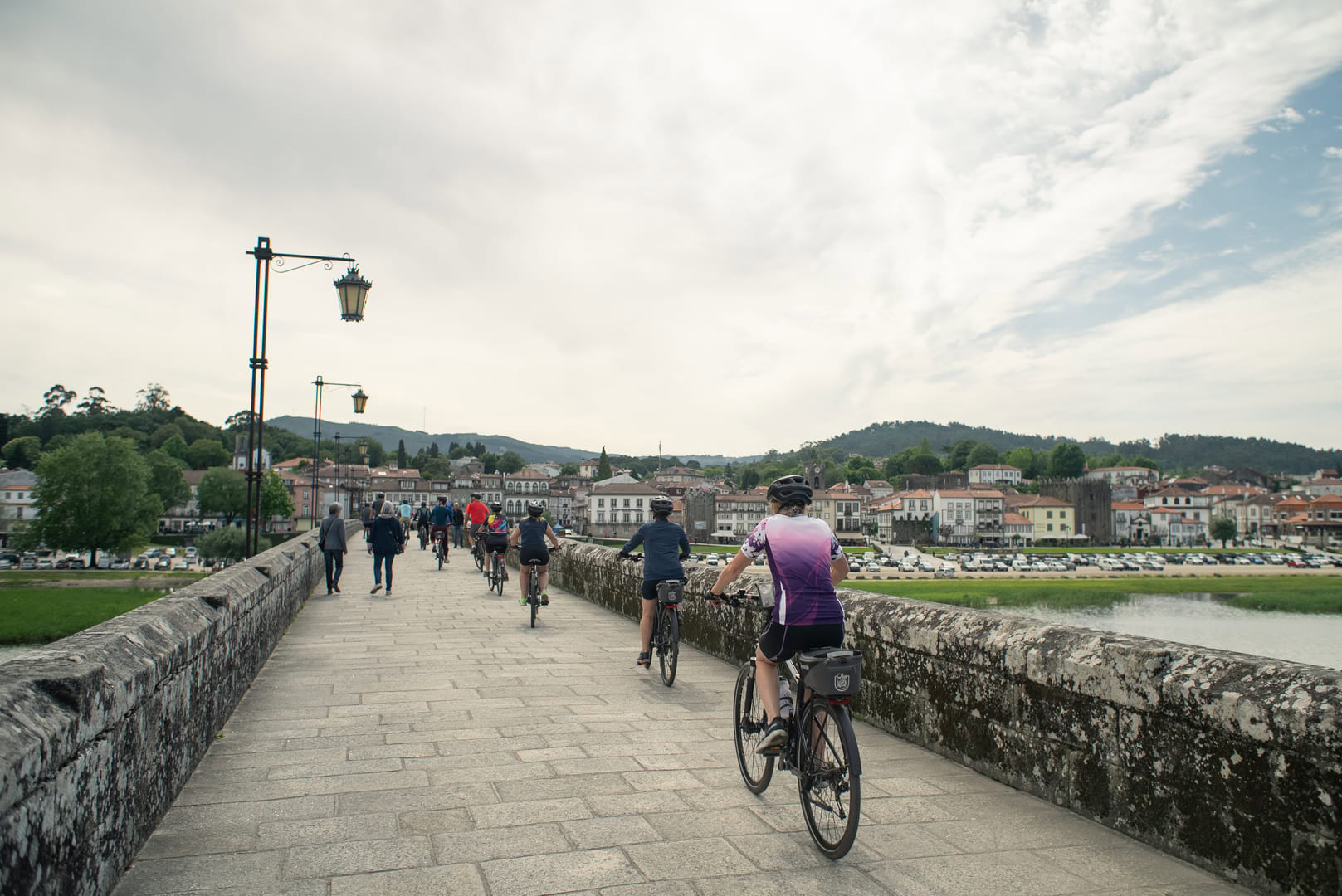
Crossing Ponte de Lima historical bridge – a mark of the Portuguese Central Camino route
That depends on the landscapes you want to experience, how much time you have, your cycling ability and, perhaps most importantly, what you want your Camino to feel like.
Porto: where the journey begins
For many cyclists, Porto is the natural starting point for the Portuguese Camino.
The journey traditionally begins at the Sé do Porto, the city’s cathedral overlooking the historic centre and Douro River.
From here, the yellow Camino arrows begin pointing north.
Before leaving, you can obtain your pilgrim credential, or credencial, and collect your first stamp. Over the following days, that credential gradually fills with stamps from accommodations, churches, cafés and other places along the route.
There is something beautifully simple about starting a long cycling journey this way.
One city behind you. One destination ahead. And hundreds of kilometres of Portugal and Galicia in between.
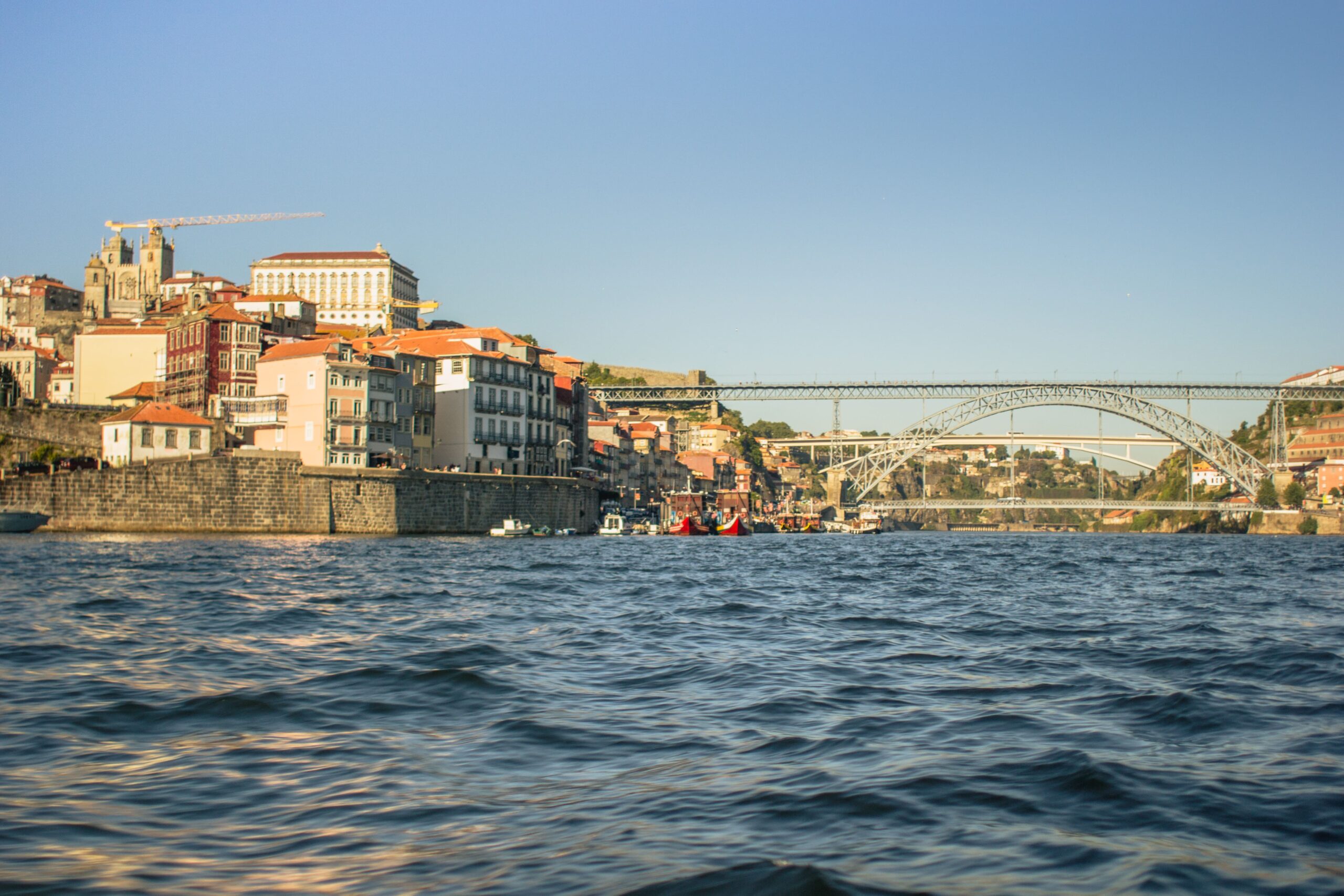
Take your time to explore Porto before starting tour tour
The most important decision when planning a bike tour from Porto to Santiago is which Portuguese Camino you want to follow. Broadly, you have two classic choices:
The Coastal Camino heads from Porto towards the Atlantic and follows the coast north through a changing landscape of beaches, fishing towns, cycleways, boardwalks, quiet roads and Camino tracks.
The ocean defines much of the Portuguese section. Places such as Vila do Conde, Viana do Castelo and Caminha punctuate the journey north before you cross the Minho River into Galicia.
From there, the route continues through coastal Spain, including Baiona and Vigo, before eventually converging with the Central route around Redondela.
For cyclists, the Coastal Camino generally offers a more accessible introduction to riding the Portuguese Way, particularly during its earlier stages. That doesn’t mean it is completely flat or easy. Galicia still brings climbing, mixed surfaces and consecutive days in the saddle.
But if you are drawn to the Atlantic, coastal landscapes and a slightly gentler Portuguese section, this is probably the route to consider first.
Go deeper: Read our complete guide to cycling the Portuguese Coastal Camino from Porto to Santiago.
View the experience of one of our bike tours in the Coastal variation of the Portuguese Camino:
The Central Camino heads inland from Porto and offers a very different view of northern Portugal.
This is the more traditional, rural Portuguese Way, passing through countryside, vineyards, small communities and some of northern Portugal’s most historic towns.
Two places in particular define the Portuguese section for us. Ponte de Lima is one of the great stops on the Camino, with its historic bridge, riverside setting and beautiful old centre. Further north, Valença provides a spectacular conclusion to the Portuguese part of the journey. Its enormous fortress overlooks the Minho River, with the Spanish town of Tui visible immediately across the water.
The Central route is also more rugged and slightly more challenging by bicycle. Expect more climbing, cobbled lanes, forest tracks and sections where careful cycling-specific route planning becomes important.
For riders looking for a more rural, traditional and adventurous experience, that’s precisely the attraction.
Go deeper: Read our complete guide to cycling the Central Portuguese Camino from Porto to Santiago.
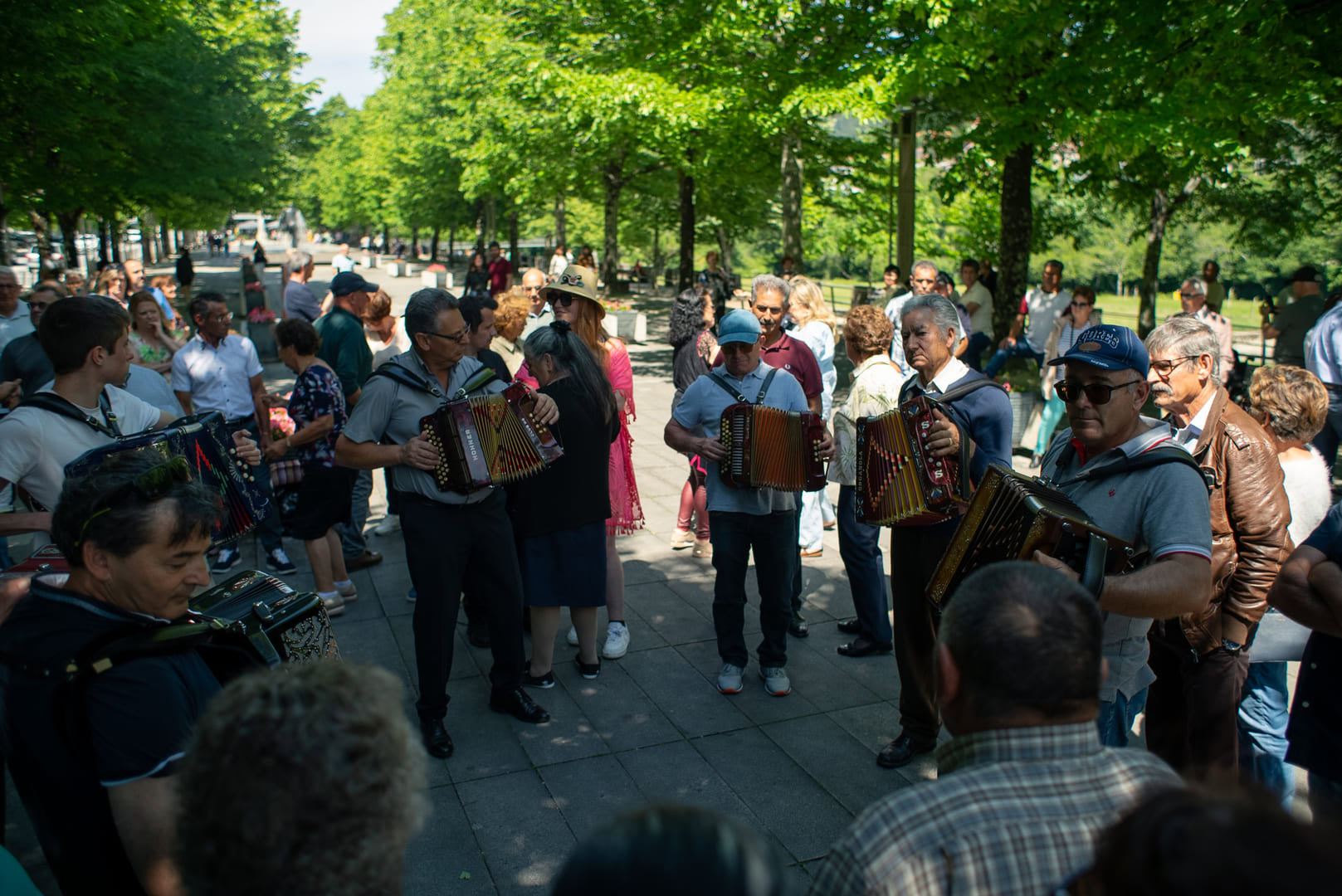
Impromptu Concertina concert in Minho
If you’re trying to decide between the two, this is how we would characterize them:
| Coastal Camino | Central Camino | |
|---|---|---|
| Character | Maritime and coastal | Historic, inland and rural |
| Portuguese scenery | Atlantic, beaches, fishing towns | Countryside, vineyards, historic towns |
| Difficulty | Moderate | Moderate, but more rugged |
| Terrain | Cycleways, roads, boardwalks, cobbles, tracks | Roads, cobbles, forest tracks, gravel, old paths |
| Key Portuguese highlights | Viana do Castelo, Caminha | Ponte de Lima, Valença |
| Best for | Ocean lovers, first-time Camino cyclists | Riders seeking a more traditional and adventurous Camino |
| Bike recommendation | MTB, e-bike, gravel depending on rider | Recreational-geometry MTB or e-bike; gravel for experienced riders |
| Crossing into Spain | Minho crossing around Caminha | International bridge from Valença to Tui |
| Routes converge | Around Redondela | Around Redondela |
| Finish | Santiago de Compostela | Santiago de Compostela |
There is no universally better route.
There is only the route that better matches the Camino you want to experience.
Or don’t choose: ride the best of the Camino
There is another possibility.
A great cycling journey doesn’t necessarily have to follow a single Camino variant from beginning to end.
At Live Love Ride, our Best of the Camino approach is different.
Rather than treating the yellow arrows as an obligation to follow one route exclusively, we can use our knowledge of the region to create a more curated journey, combining outstanding sections, landscapes and experiences from different Camino variants.
This approach is for riders who are less concerned with saying “I followed this exact Camino” and more interested in asking:
“What would make the best possible cycling journey to Santiago?”
It allows us to prioritize the quality of the riding, accommodations, landscapes, gastronomy and overall experience while retaining the spirit and destination of the Camino.
Explore: Our Best of the Portuguese Camino de Santiago bike tour.
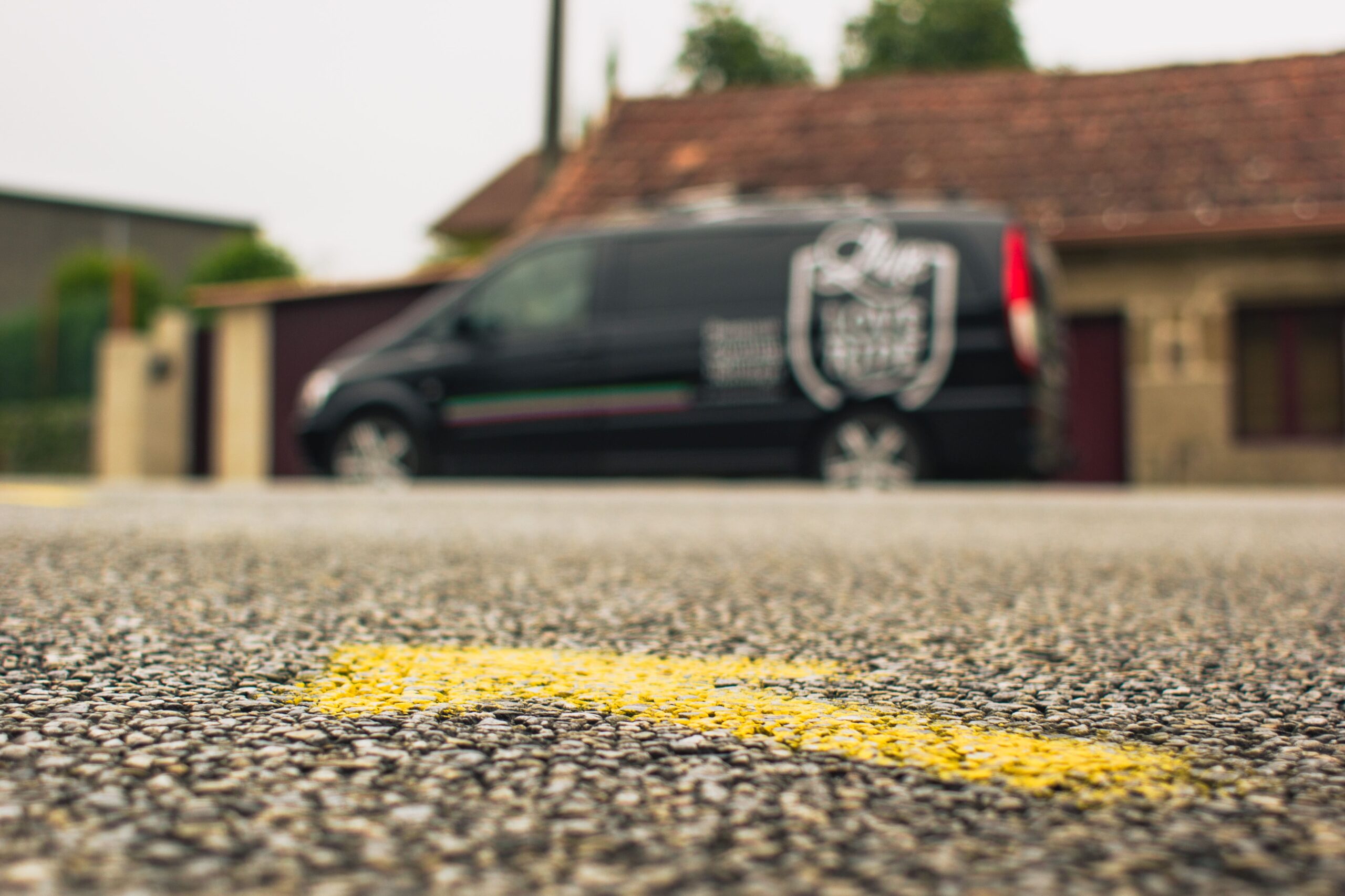
The famous yellow arrows pointing towards Santiago de Compostela
You don’t need to be an elite cyclist to ride from Porto to Santiago.
But you do need to respect the fact that this is a multi-day cycling journey.
For many recreational riders, the challenge isn’t any single day. It’s waking up and getting back on the bike repeatedly.
Daily distance, elevation, surface, bike choice and how many days you allocate to the journey all affect difficulty considerably.
The Coastal route generally provides the gentler introduction.
The Central route has more rugged terrain and can be more technically and physically demanding, particularly if you stay close to the traditional walking route.
In Galicia, both routes involve repeated climbing as you move towards Santiago.
Strong riders can cover substantial distances each day.
But we don’t necessarily recommend doing so.
The Camino rewards time.
A slightly shorter stage means you can stop for coffee, walk around Ponte de Lima or Pontevedra, enjoy lunch without watching the clock and talk to people you meet along the way.
That’s part of the experience too.
For most travellers, we recommend approximately five to seven riding days, depending on the chosen route, fitness level and desired pace.
It is certainly possible to cycle from Porto to Santiago faster.
Whether you should is another question.
If your objective is primarily athletic, longer stages can make sense.
If your objective is to combine cycling with the experience of the Camino, its towns, food, landscapes and pilgrim culture, allowing more time generally creates a richer journey.
An extra day can make a surprisingly large difference to how the trip feels.
There isn’t one perfect Camino bicycle.
The best bike depends on which route you’re riding and how you ride.
For many recreational cyclists, a mountain bike with a comfortable, upright geometry is our preferred all-round option.
Wider tires, stability and front suspension provide confidence over cobbles, forest tracks and rougher Camino surfaces.
This becomes particularly valuable on the Central route.
An e-bike is one of the best ways to make the Portuguese Camino accessible to a wider range of riders.
It is particularly useful if you’re concerned about climbing, consecutive riding days or differences in fitness between people travelling together.
On the more rugged Central Camino, an e-mountain bike can be an excellent choice.
Experienced cyclists may prefer a gravel bike for its efficiency and more dynamic feel.
It can be a fantastic Camino bike in the right hands, but technical confidence matters.
A strong road cyclist isn’t automatically a strong off-road rider, and rough cobbles and tracks can feel very different on narrower tires and drop handlebars.
For us, the question isn’t “What is the fastest bike?”
It’s “Which bike will help you enjoy this particular Camino?”
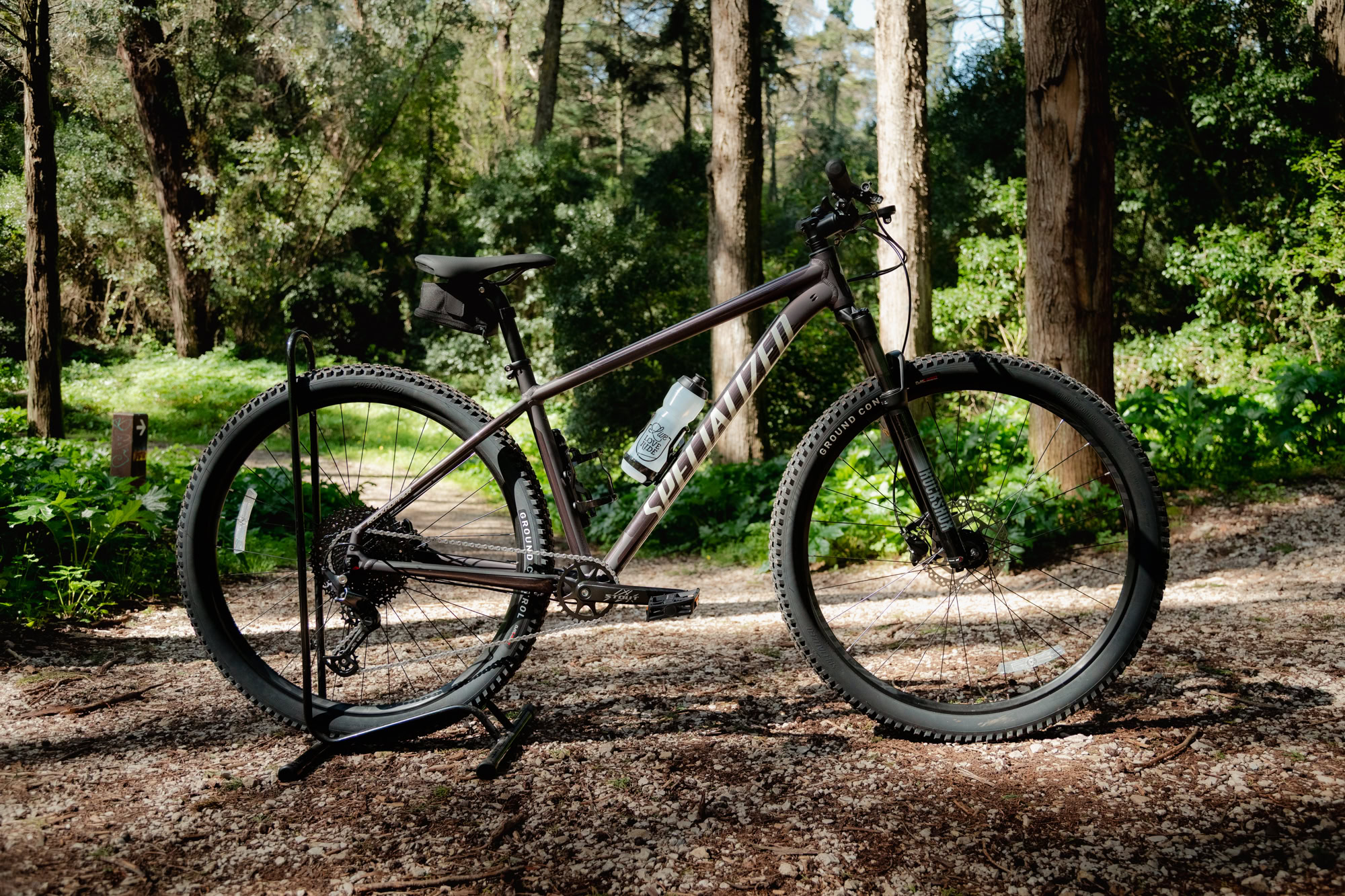
The Specialized Rockhopper Comp, a recreational geometry mountain bike designed for stable and comfortable riding on Portugal’s forest trails and countryside paths.
Yes, but this is where local route knowledge becomes important.
The Camino de Santiago was created primarily for pilgrims travelling on foot.
Many walking sections are perfectly enjoyable by bicycle. Some aren’t. A yellow arrow can occasionally send cyclists onto a steep, rough or technical path when an excellent alternative exists nearby.
At Live Love Ride, we don’t believe experiencing the Camino by bike means you have to carry your bicycle through every section designed for walkers.
Our local team scouts and adapts the routes specifically for cyclists, balancing the historic Camino with rideability, safety and enjoyment.
That becomes particularly important on the more rugged sections of the Central Way.
Both work extremely well on the Portuguese Camino.
A self-guided bike tour gives you independence during the day.
You have the route and support structure organized, but you decide when to leave, where to stop for coffee and how long to spend exploring somewhere along the way.
For many people, that independence fits perfectly with the spirit of the Camino. And self-guided doesn’t have to mean unsupported.
With properly designed GPS routes, luggage transfers, pre-booked accommodations, the right bicycle and access to local assistance, most of the logistical uncertainty can be removed while preserving the freedom of riding independently.
A guided bike tour in Portugal adds local knowledge and companionship to the experience.
Your guide handles navigation and helps interpret the landscapes, food, history and traditions you encounter along the way.
The better option depends on how independently you like to travel.
For us, the Portuguese Camino isn’t a distant destination that we operate a few times each year.
It’s part of our backyard.
Live Love Ride has a permanent local team at our Porto Bike Station, with guides, bicycles and technical support based close to the Portuguese Camino.
Our team is regularly out on the route, guiding guests, supporting self-guided riders, scouting sections and adapting our GPS tracks as necessary.
That proximity matters on a multi-day journey.
If something needs attention, our support isn’t being coordinated from another country or from the other end of Portugal. We have a local operation close to where our guests begin their Camino and ride north.
We also maintain a specialized premium bike fleet, including recreational mountain bikes, e-bikes, gravel bikes and other options suited to different riders and versions of the Camino.
Rather than asking every guest to ride the same bicycle, we help match the bike to the route, rider and experience they want.
Because the best Camino bike isn’t the most expensive or fastest one.
It’s the one you stop thinking about while you’re riding it.
Both Portuguese routes eventually take you into Galicia, but they cross the border differently.
On the Coastal route, crossing the Minho around Caminha can involve a boat taxi, creating one of the most memorable border crossings of the journey.
On the Central route, you ride through the fortress of Valença and cross the International Bridge directly into Tui, with the Minho flowing beneath you.
Eventually, the two routes converge around Redondela. From here, Coastal and Central pilgrims share much of the same journey north through Pontevedra, Caldas de Reis and Padrón.
As the different routes merge, the Camino becomes busier.That is part of the experience.
People who have travelled different paths gradually find themselves following the same arrows towards the same place.
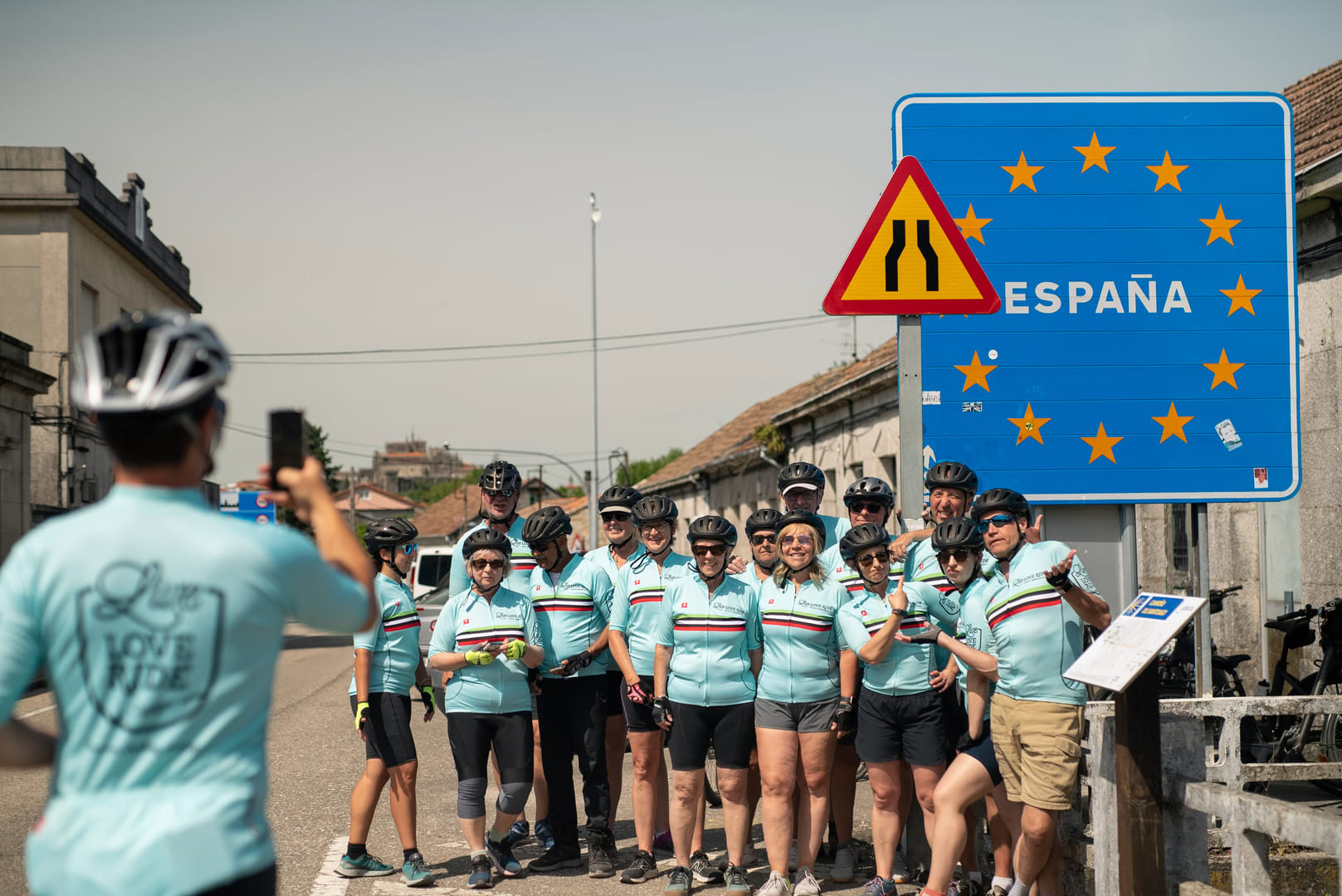
Cycling into Galicia, from Valença to Tui
Eventually, those arrows lead into Santiago.
The final kilometres can feel strangely different from everything that came before them.
After days of forests, villages, roads and tracks, you enter a city.
More pilgrims appear. The Cathedral gets closer. And then the narrow streets of the historic centre eventually open onto the Praza do Obradoiro.
Arriving in front of Santiago Cathedral by bicycle after riding from Porto is difficult to compare with finishing an ordinary bike tour. Your GPS says the ride is over, and your legs probably agree.
But most people stay in the square for a while.
If attending the Pilgrim’s Mass is important to you, check the Cathedral’s current schedule before travelling and plan your final stage accordingly. We particularly like arriving in Santiago during the morning, giving you time to enjoy the square, attend to pilgrim formalities and experience the city without rushing.
If you’re still undecided, we would simplify the choice like this:
Choose the Coastal Camino if you want the Atlantic, fishing towns, coastal scenery and a generally more accessible Portuguese section.
Choose the Central Camino if you want historic towns, rural northern Portugal, a more traditional Camino atmosphere and don’t mind a more rugged challenge.
Choose the Best of the Camino if following one specific route matters less to you than experiencing a carefully curated selection of great cycling, landscapes, accommodations and Camino highlights.
All three ultimately share the same idea:
You leave Porto, you travel north under your own power. And eventually, you arrive in Santiago. How you get there is what makes your Camino yours.
Ready to start planning? Explore our Camino de Santiago bike tours from Portugal and discover the different ways to ride towards Santiago with Live Love Ride.
For more detailed route information, read our complete guide to cycling the Portuguese Coastal Camino or our complete guide to cycling the Central Portuguese Camino.
You can also experience the Camino in a completely different way with our Portuguese Camino de Santiago walking tours, or continue exploring Spain on our Camino bike tour from León to Santiago.
And if you’re still deciding where your next cycling journey should take you, explore all our bike tour destinations.